Building strength does not require a gym membership, a rack of weights, or complicated machines. A well-designed beginner strength training routine at home without equipment can use body weight, gravity, controlled movement, and household space to train major muscle groups. The most important ingredients are consistency, sensible progression, good technique, and enough recovery.
This guide explains what body-weight strength training is, how to structure a beginner routine, how to modify common exercises, and how to combine training with healthy daily habits, balanced nutrition, mobility work, sleep, and stress management. It is intended for generally healthy adults who are new to strength training. It is not a diagnosis or individualized medical program.
What Is Strength Training Without Equipment?
Strength training is planned exercise that challenges muscles to produce force against resistance. In a no-equipment routine, that resistance usually comes from your body weight. Exercises such as squats, push-ups, lunges, and planks can improve muscular strength, coordination, balance, and work capacity when performed consistently.
Body-weight training is not automatically easy. A movement can become more demanding when you increase its range of motion, slow the lowering phase, pause at a difficult position, use a single-limb variation, or perform additional repetitions. However, it also has limitations: it can be difficult to apply precise resistance to certain muscles, especially the upper back and pulling muscles, without a bar, band, or other stable equipment.
Before You Start: Set Up Safely
Choose a clear, dry area with enough room to extend your arms and legs. Wear comfortable clothing and use a stable surface. A folded towel or exercise mat may improve comfort, but neither is essential. Avoid chairs, tables, or other household objects unless they are stable, heavy enough, and designed to support your body safely. Do not use rolling furniture for balance exercises.
Start with a short warm-up. For five to eight minutes, walk around the room, gently march in place, circle your shoulders, perform controlled hip hinges, and move through comfortable ranges of motion. The warm-up should raise alertness and prepare joints without causing fatigue.
Stop if you experience chest pain, faintness, unusual shortness of breath, sudden weakness, or sharp pain. Mild muscular effort and a manageable burning sensation can occur during training, but joint pain, worsening pain, numbness, or loss of control are reasons to stop. Anyone with a known medical condition, recent injury, pregnancy-related questions, or a long period of inactivity should ask a qualified health professional how to begin safely.
A Beginner Full-Body Routine
Perform this routine two or three nonconsecutive days per week. Leave at least one day between challenging sessions at first. Begin with one set of each exercise. After a few sessions, progress to two sets if your technique remains consistent and recovery is comfortable. Rest for about 60 to 120 seconds between sets, or longer when needed.
1. Body-Weight Squat
Works: thighs, hips, and gluteal muscles.
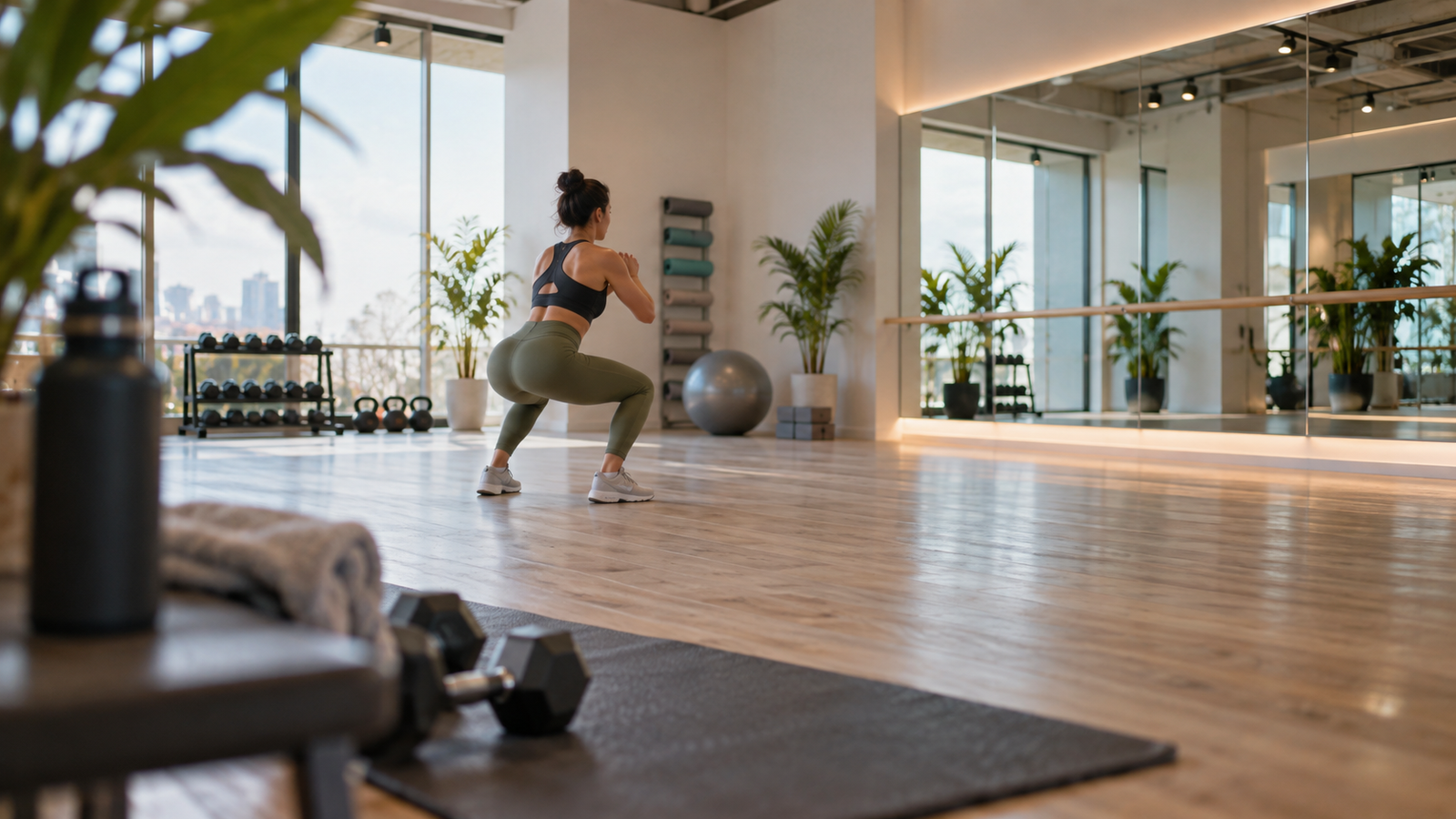
Stand with your feet approximately hip- to shoulder-width apart. Brace your midsection gently, bend your knees, and send your hips back as if sitting toward a chair. Lower only as far as you can while keeping your feet grounded and your torso controlled. Press through the floor to stand tall.
Begin with 6 to 12 repetitions. If a full squat is uncomfortable, use a smaller range of motion or sit lightly to a stable chair and stand again. Do not force depth. A slower lowering phase can make the movement more challenging without adding equipment.
2. Incline or Knee Push-Up
Works: chest, shoulders, triceps, and core.
For an incline version, place your hands on a stable, non-sliding surface that is higher than the floor. Walk your feet back, keep your body in a straight line, and bend your elbows to lower your chest toward your hands. Push away while keeping your ribs and hips controlled.
If an incline is unavailable, perform the movement from your knees or use a wall push-up. Start with 5 to 10 controlled repetitions. Keep your elbows angled moderately away from your sides rather than flaring them wide. Progress toward a floor push-up when you can maintain alignment and a steady range of motion.
3. Reverse Lunge
Works: legs, hips, and balance.
Stand tall, step one foot backward, and lower both knees under control. Keep most of your weight through the front foot while allowing the back knee to move toward the floor. Push through the front foot to return to standing, then switch sides.
Perform 5 to 8 repetitions per side. Hold onto a wall for balance if necessary. A smaller step or shallower range of motion may feel more comfortable for beginners. Keep the front knee tracking in the same general direction as the toes rather than collapsing inward.
4. Glute Bridge
Works: gluteal muscles and the muscles around the back of the hips.
Lie on your back with your knees bent and feet flat. Place your feet where you can keep your heels grounded. Tighten your abdomen gently, press through your feet, and lift your hips until your torso forms a comfortable line with your thighs. Pause briefly, then lower slowly.
Complete 8 to 15 repetitions. Avoid arching your lower back to lift higher. If you feel the exercise mostly in your lower back, reduce the height and focus on contracting your glutes.
5. Bird Dog
Works: core, shoulders, hips, and coordination.
Start on your hands and knees with your wrists below your shoulders and knees below your hips. Brace gently, then extend one leg backward and the opposite arm forward without rotating your trunk. Return slowly and change sides.
Perform 5 to 8 repetitions per side. You can begin by moving only one limb at a time. Keep the movement small enough to prevent your lower back from sagging or your hips from twisting.
6. Side Plank Modification
Works: the side abdominal muscles, shoulders, and hips.
Lie on your side and support yourself on a bent lower arm or forearm. Keep your knees bent for an easier version. Lift your hips slightly while maintaining a straight line from your shoulders to your knees, or from your shoulders to your feet if using a full side plank. Breathe steadily rather than holding your breath.
Hold for 10 to 20 seconds per side, repeating once or twice. Quality matters more than duration. Stop when you can no longer keep your trunk aligned.
How to Progress Without Weights
Strength improves when the muscles receive a gradually increasing challenge and have time to adapt. This principle is often called progressive overload. You do not need to make every workout harder. Change one variable at a time and keep a simple record of exercises, repetitions, and how the sets felt.
- Improve technique first: Use a controlled pace, comfortable range of motion, and stable alignment.
- Add repetitions: If you can complete the top of your planned repetition range with good form, add one or two repetitions during a later session.
- Add a set: Move from one set to two after your body has adjusted and soreness is manageable.
- Slow the movement: Take two or three seconds to lower, then move smoothly upward.
- Add a pause: Pause briefly at the bottom of a squat, the lowest safe point of a push-up, or the top of a bridge.
- Use a harder variation: Progress from wall push-ups to incline push-ups, knee push-ups, and eventually floor push-ups. Progress from supported split squats to reverse lunges when balance allows.
- Increase range gradually: Work through a larger comfortable range only when you can control the movement.
Leave one or two technically sound repetitions in reserve rather than taking every set to complete failure. Beginners often gain more from repeatable practice than from exhausting sessions that disrupt sleep or cause excessive soreness.
Sample Weekly Schedule
A simple schedule can make the routine easier to maintain:
- Monday: Full-body strength routine and a brief cool-down.
- Tuesday: Easy walking or gentle mobility.
- Wednesday: Full-body strength routine.
- Thursday: Rest, walking, or light stretching.
- Friday or Saturday: Optional third strength session if recovery is good.
- Sunday: Rest and preparation for the coming week.
The Centers for Disease Control and Prevention recommends that adults include muscle-strengthening activity as part of a broader weekly activity pattern, while the World Health Organization also identifies muscle-strengthening work as an important component of physical activity. These recommendations are useful context, but they do not mean that every beginner must immediately follow a demanding schedule. Build capacity gradually.
Mobility, Recovery, and Healthy Daily Habits
Strength training works best when it is supported by ordinary recovery habits. After training, walk for a few minutes and perform gentle movements for areas that feel stiff. Stretching can be included if it feels comfortable, but it should not be forced or used to mask pain.
Sleep supports physical recovery, concentration, and appetite regulation. Maintain a regular sleep and wake time when possible, reduce stimulating screen use before bed, and keep the bedroom comfortable and dark. Stress management also matters. Short walks, breathing exercises, journaling, social connection, and time outdoors can make it easier to train consistently without treating exercise as another source of pressure.
Daily movement outside workouts is valuable. Break up long periods of sitting, take stairs when appropriate, and use walking as a low-impact way to build general fitness. These habits complement strength training but do not replace rest when your body needs it.
Balanced Nutrition for Beginner Strength Training
You do not need a special supplement or restrictive diet to begin. Aim for regular meals built from a variety of foods: vegetables and fruit, whole grains or other carbohydrate sources, beans, lentils, eggs, dairy or fortified alternatives, fish or other protein foods, nuts, seeds, and unsaturated fats.
Protein contributes amino acids used in tissue maintenance and repair, but more is not always better. Include a protein source in meals according to your preferences and dietary needs. Carbohydrates can provide useful training energy, while fluids support normal body function. A glass of water with meals and drinking when thirsty is a reasonable starting point for many people, although fluid needs vary with heat, exercise duration, health status, and medications.
Meal planning can be simple: choose two or three repeatable breakfasts, prepare a batch of a protein-rich food and a grain or starchy vegetable, and keep easy produce available. People with kidney disease, diabetes, eating-disorder history, food allergies, or other medical concerns should seek personalized nutrition advice before making major dietary changes.
Pros and Limitations of No-Equipment Training
Potential advantages
- It is accessible and can be performed in a small space.
- It has no equipment purchase or gym travel requirement.
- Many movements train balance, coordination, and control alongside strength.
- Exercises can be modified for different ability levels.
- Short sessions may be easier to fit into a busy schedule.
Important limitations
- Progressive resistance is less precise than with adjustable weights or machines.
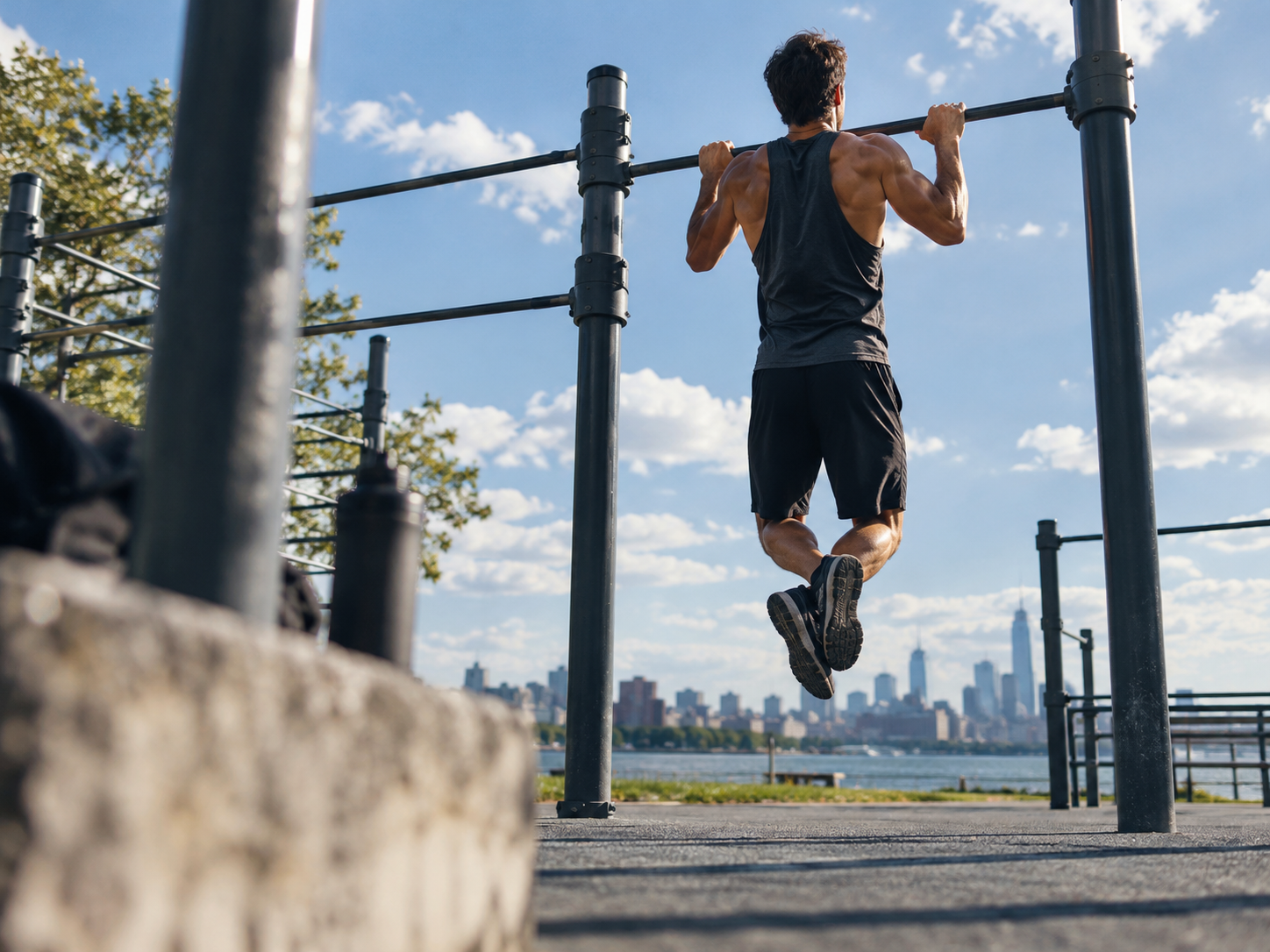
- Pulling movements for the upper back are difficult to train fully without a safe anchor, resistance band, or pull-up setup.
- Advanced trainees may eventually need external resistance for continued strength or muscle development.
- Body-weight exercises may aggravate existing joint or tendon problems if selected or progressed poorly.
- Without coaching or feedback, beginners may repeat technique errors.
If you later buy equipment, prioritize safe and versatile options such as a resistance band set, a stable exercise mat, or adjustable dumbbells. Compare products by stability, adjustability, storage, clear instructions, warranty terms, and return policy rather than by marketing claims alone. A fitness tracker can help record consistency, but it cannot reliably assess lifting technique or replace professional advice.
Common Beginner Mistakes
- Doing too much too soon: High soreness is not proof of a better workout. Start with manageable volume.
- Rushing repetitions: Fast, uncontrolled movement can make it harder to identify technique problems.
- Ignoring the upper back: Include posture, shoulder-blade control, and eventually a safe pulling exercise if equipment becomes available.
- Training through sharp pain: Modify the movement or stop and seek appropriate guidance.
- Changing the plan constantly: Use the same basic exercises long enough to notice whether control and capacity improve.
- Expecting food supplements to replace habits: Supplements are not a substitute for adequate food, sleep, training, or medical care.
Concise Q&A
How often should a beginner do this routine?
Start with two nonconsecutive sessions per week. Add a third session only when technique, energy, and recovery remain good.
Can body-weight training build strength?
Yes. It can improve strength, especially for beginners, when movements are challenging and progressed over time. The amount of progress depends on exercise selection, training consistency, recovery, and individual factors.
What if I cannot do a standard push-up?
Use wall push-ups, incline push-ups, or knee push-ups. Choose the version that allows controlled repetitions and gradually lower the incline or increase the range of motion.
Do I need to feel sore after training?
No. Soreness can occur after unfamiliar exercise, but it is not a required sign of an effective workout. Persistent or severe soreness suggests that the training load may be too high or that recovery needs attention.
When should I add equipment?
Add equipment when you want more precise progression, stronger pulling exercises, or a greater challenge that body weight no longer provides. Equipment is optional, not a requirement for starting.
Sources and Information Basis
This article follows general physical-activity and resistance-training principles described by the U.S. Centers for Disease Control and Prevention adult activity guidelines, the World Health Organization Guidelines on Physical Activity and Sedentary Behaviour, and the American College of Sports Medicine’s physical-activity resources. Recommendations here are generalized for education and are not a substitute for an assessment by a physician, physical therapist, registered dietitian, or qualified fitness professional.
Safety and informational disclaimer: Consult a qualified health professional before beginning or changing an exercise or nutrition program if you have a medical condition, injury, pregnancy-related concern, significant symptoms, or uncertainty about safe movement. Stop exercise and seek urgent medical help for serious symptoms such as chest pain, fainting, or severe breathing difficulty.
Leave a Reply