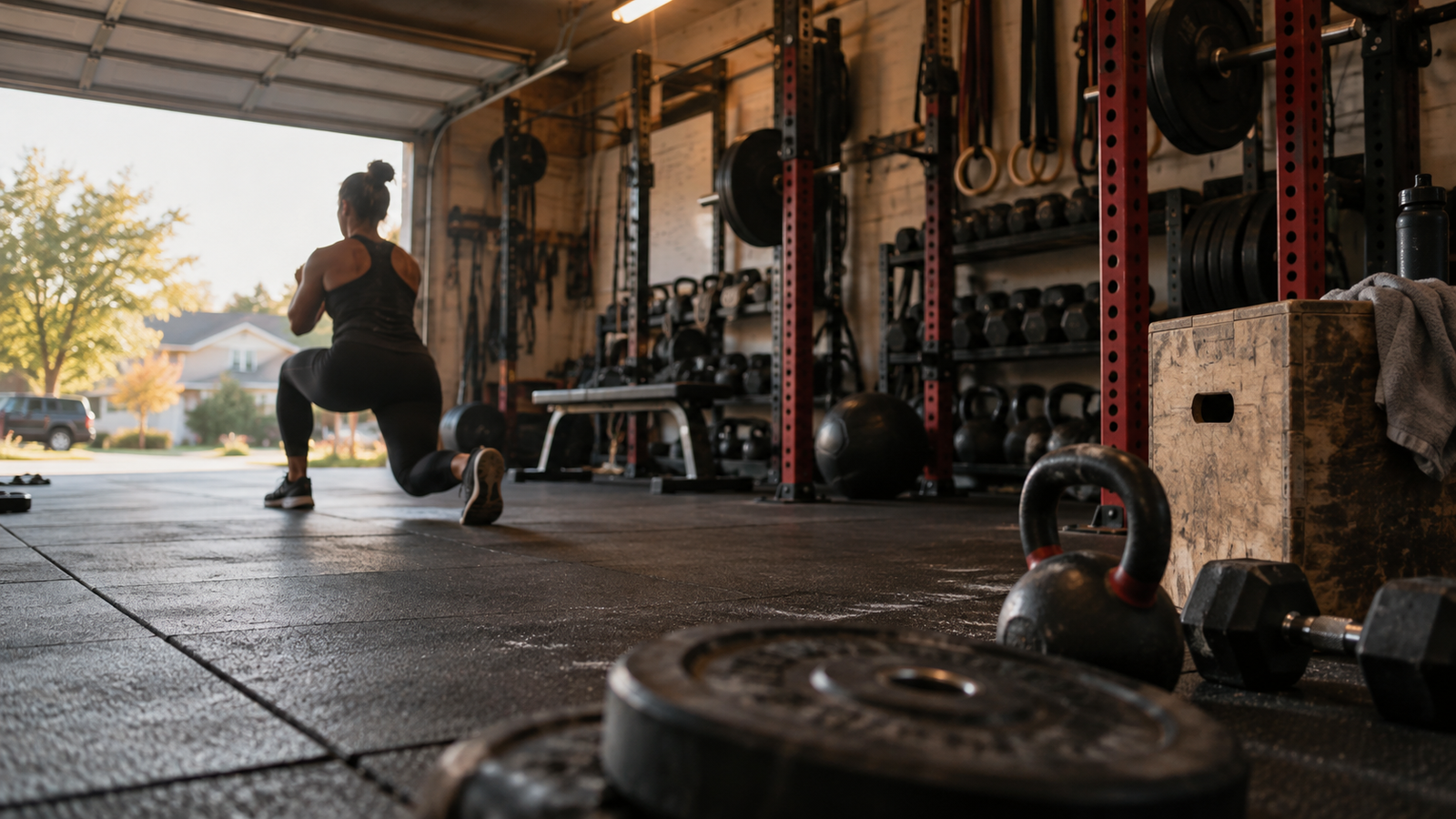
A beginner full body workout at home can help you build strength and movement skills without needing a gym membership or complicated equipment. The key is not to make every session exhausting. Instead, learn a few basic movement patterns, practice them with good control, and increase the challenge gradually as they become easier.
This guide explains what a full-body workout is, gives you a beginner-friendly routine, and shows how to adapt it to your space, fitness level, and schedule. It also covers warm-ups, recovery, equipment choices, common mistakes, and ways to connect exercise with everyday habits.
What is a beginner full body workout at home?
A beginner full body workout at home is a planned exercise session that trains major muscle groups using movements you can do in your living space. A balanced routine usually includes a squat or other knee-bending movement, a hip hinge, a push, a pull, and exercises that challenge the trunk and balance. “Full body” does not mean every muscle receives the same amount of work; it means the session covers several major areas rather than focusing only on, for example, the arms or legs.
For a new exerciser, the purpose is to learn controlled movement, build a repeatable routine, and develop basic strength and stamina. Body weight can provide enough resistance at first. A sturdy chair, wall, or backpack filled lightly with household items can offer options, but you do not need special gear to begin.
Before you start: safety and setup
Choose a clear, nonslip space where you can extend your arms and legs without hitting furniture. Wear clothing that lets you move freely and keep water nearby. If you use a chair for support, make sure it is stable and will not slide. Avoid using furniture that could tip, roll, or collapse under pressure.
Start at an effort that feels manageable. During a set, you should be able to maintain your technique and stop with a little energy left rather than forcing out repetitions with poor form. Mild muscle effort is expected; sharp pain, chest discomfort, faintness, or unusual shortness of breath are reasons to stop and seek appropriate medical advice. If you have a chronic condition, are recovering from an injury, are pregnant or recently gave birth, or have been advised to limit activity, ask a qualified health professional how to adapt your exercise.
The World Health Organization’s Guidelines on Physical Activity and Sedentary Behaviour recommend that adults include muscle-strengthening activity as part of an overall active lifestyle. The Centers for Disease Control and Prevention (CDC) also provides guidance on aerobic and muscle-strengthening activity. These are general public-health recommendations, not a personalized prescription. A short beginner session is a reasonable place to build a habit, but it may not by itself meet every person’s broader activity needs.
Warm up for five to eight minutes
A warm-up should prepare you for the movements in the workout, not tire you out. Try this simple sequence at an easy pace:
- March in place for one minute, letting your arms move naturally.
- Do gentle shoulder rolls and arm circles in both directions.
- Practice five to eight slow sit-to-stands from a stable chair.
- Perform a few hip hinges: soften your knees, push your hips back, then stand tall.
- Walk your hands up a wall or perform easy wall push-ups.
Keep the movements comfortable and controlled. If a warm-up movement causes pain, skip it and use a pain-free alternative.
Beginner full body workout at home
Complete the exercises in order. For the first few sessions, do one or two rounds. Rest for about one to two minutes between exercises, or longer if you need it to regain comfortable breathing and steady technique. Aim for a number of repetitions that feels controlled; the ranges below are starting points, not targets you must reach.
1. Chair squat or sit-to-stand
Works: thighs, hips, and glutes. Stand in front of a stable chair with your feet about hip- to shoulder-width apart. Send your hips back and bend your knees to lower toward the seat. Lightly touch down, then press through your feet to stand. Try 6–10 repetitions. If sitting down is uncomfortable, use a higher seat or lower only partway. If the chair is not suitable, practice a small squat while holding a stable counter for support.
2. Wall push-up
Works: chest, shoulders, and arms. Place your hands on a wall around chest height, slightly wider than your shoulders. Step back enough to lean into the wall while keeping your body in a comfortable straight line. Bend your elbows to bring your chest closer to the wall, then push back. Try 6–10 repetitions. Move your feet closer to the wall to make it easier; stepping farther away increases the challenge.
3. Glute bridge
Works: glutes and the back of the hips. Lie on your back with knees bent and feet flat, spaced about hip-width apart. Gently brace your abdomen and press through your feet to lift your hips until your body forms a comfortable line from shoulders toward knees. Pause briefly, then lower with control. Try 8–12 repetitions. Avoid arching your lower back to lift higher; use a smaller range if needed.
4. Hip hinge with a backpack or no load
Works: glutes, hamstrings, and trunk. Stand tall with a soft bend in your knees. Push your hips backward as your torso leans forward, keeping your back in a comfortable neutral position. Return to standing by bringing your hips forward. Try 8–10 repetitions without weight first. Once the movement is familiar, you can hold a lightly loaded backpack close to your body. Use only a load you can lift and lower smoothly.
5. Supported row
Works: upper back and arms. If you have a resistance band designed for exercise and a secure anchor fitted according to its instructions, you can perform a standing band row. Pull your hands toward your lower ribs, keep your shoulders relaxed, and return slowly. Try 8–12 repetitions. Without a band or secure anchor, do not improvise with a door handle, unstable furniture, or a sheet tied to something. Instead, practice a gentle shoulder-blade squeeze while standing tall, or choose another comfortable upper-body movement until you have suitable equipment.
6. Bird dog
Works: trunk control and balance. Start on hands and knees with your hands under your shoulders and knees under your hips. Keep your torso steady as you reach one leg behind you, or lift the opposite arm and leg if that feels comfortable. Pause, return, and change sides. Try 5–8 repetitions per side. Move only as far as you can without twisting or arching your back.
7. Calf raise
Works: calves and ankle control. Stand near a wall or stable counter for light support. Rise onto the balls of your feet, pause, and lower slowly. Try 8–12 repetitions. Keep your weight balanced rather than rolling onto the outside edges of your feet.
Finish with two or three minutes of easy walking around the room and relaxed breathing. Stretching is optional; if you stretch, keep it gentle and stop if it hurts.
How often to exercise and how to progress
Begin with two nonconsecutive full-body sessions per week if that fits your current activity level. Leave time between sessions to see how your body responds. You can add easy walking, cycling, or other enjoyable movement on separate days, building up gradually. Consistency matters more than trying to compensate for missed sessions with a very hard workout.
When all repetitions feel controlled across several sessions, make one small change: add a repetition or two, add another round, slow the lowering phase, or choose a slightly harder variation. Change one element at a time so you can judge how your body responds. For example, you might progress from a wall push-up to a push-up against a stable counter before attempting one from the floor. You do not need to increase difficulty every week.
A simple training note can record the date, exercise variation, repetitions, and how the session felt. A notebook or phone note is enough. A fitness tracker may help some people remember activity or observe broad patterns, but it is optional. Device estimates and readiness scores are not medical diagnoses, and different products may measure or present information differently.
Make the routine fit real life
Keep a minimum version
On a busy day, do one round of the routine or choose three movements: a squat variation, a push, and a hip or trunk exercise. A shorter session can help keep the habit alive, though it is not necessary to treat every day as a workout day. Rest is part of a sustainable plan.
Pair movement with everyday habits
Choose a reliable cue, such as exercising after breakfast or before an evening shower. Put shoes or a mat in a visible place, and keep the routine written down. If you sit for long periods, short movement breaks can be useful, but they do not replace a structured strength session when your goal is to practice resistance exercise.
Support training with food, hydration, and sleep
You do not need a special diet or supplement to start. Regular meals containing a mix of foods—such as vegetables or fruit, grains or other carbohydrate sources, and protein-containing foods—can support general health and exercise. Meal planning can make it easier to have convenient options available, but it need not be elaborate. Drink according to thirst and your circumstances; needs vary with activity, environment, and health. Aim for a sleep routine that gives you enough opportunity to rest. Poor sleep or high stress can affect how a session feels, so consider a gentler workout or rest when you are unusually fatigued.
Home equipment: useful, not required
Body-weight exercises cost little and take up minimal space, but some movements may become less challenging as you grow stronger. A resistance band or a pair of adjustable weights can expand your options, while a mat may make floor exercises more comfortable. Consider storage, instructions, material condition, and whether you can use the item safely. A band should be checked for wear, and an anchor must be appropriate for the product and setting. Avoid buying equipment simply because it promises fast results.
There are trade-offs. Body-weight training is accessible, but it can be harder to add resistance in small increments for certain muscles. Bands and weights make progression more flexible, but require cost, storage, and safe handling. There is no universally best choice; select equipment based on the exercises you will actually do and the space you have.
Common beginner mistakes
- Doing too much too soon: A very demanding first session can leave you sore and make it harder to return. Start with fewer rounds and build gradually.
- Rushing repetitions: Slower, controlled movement makes it easier to notice balance or technique problems. Stop a set when you cannot keep the movement steady.
- Copying advanced variations: Online videos may show exercises that are not appropriate for your current level. Choose a version you can perform comfortably.
- Ignoring recovery: Rest days, adequate food, and sleep support a routine you can maintain. Training through sharp or worsening pain is not a useful shortcut.
- Expecting one workout to solve everything: Strength, mobility, cardiovascular activity, nutrition, sleep, and stress management all contribute to overall well-being. A home routine is one part of a broader approach.
Benefits and limitations
Potential benefits: Home training can reduce travel, require little or no equipment, and make it easier to practice basic strength movements. A planned routine gives you a clear starting point and can be adjusted for different fitness levels. Training at home may also feel more private or convenient for people who prefer not to exercise in a gym.
Limitations: It can be difficult to judge technique without feedback, and some people find distractions or limited space make consistency harder. Body-weight exercises may not provide enough challenge for every goal over time. This routine is general guidance rather than an individualized program; it does not assess your medical history, injuries, mobility, or specific training needs. If you are uncertain about technique, a qualified exercise professional can help you learn and adapt movements.
Q&A
How long should a beginner home workout take?
Allow enough time to warm up, complete one or two rounds, rest as needed, and cool down. The exact duration depends on your pace and recovery. You do not need to exercise for a particular length of time to make a session worthwhile.
Can I do this workout every day?
Most beginners should leave recovery time between full-body strength sessions rather than repeating the same challenging routine daily. Gentle walking or comfortable mobility practice may suit other days, depending on how you feel and any health advice you have received.
Do I need weights to build strength?
No. Body-weight movements can be a useful starting point. As exercises become easier, adjust the variation or consider suitable resistance equipment. Keep any added load light enough to handle with control.
What if I am sore after exercising?
Some mild muscle soreness can occur after unfamiliar activity, but severe, worsening, or unusual pain should not be ignored. Reduce the next session’s volume or intensity, allow recovery, and seek medical advice when symptoms concern you.
Bottom line
A beginner full body workout at home works best when it is simple, safe, and repeatable. Start with comfortable variations, practice controlled repetitions, and increase the challenge gradually. Pair exercise with everyday movement, balanced meals, and adequate recovery rather than relying on a single workout or product. This article is educational and not a substitute for individualized medical advice; consult a qualified health professional if you have a health concern or need help choosing safe activity.
Leave a Reply